

Perhaps you find yourself close to tears over something that would once have passed you by. You lose your train of thought in a meeting, wake feeling tired, or feel unusually anxious before an ordinary day.
When these changes start to affect daily life, it can be unsettling — especially when you cannot explain why. Perimenopause and menopause may be part of the picture. Understanding that possibility can help you find support.
You deserve to be heard, even when it is difficult to put how you feel into words.
Can this start before your periods stop?
Yes. Perimenopause is the transition leading up to menopause, when hormone levels fluctuate and periods may change. Emotional symptoms can occur while you are still having periods. Menopause is usually recognised after 12 months without a period, provided hormonal contraception or another cause does not explain this.
Some women notice few changes. Others experience symptoms that affect their relationships, confidence or working day. There is no single way you are supposed to feel.
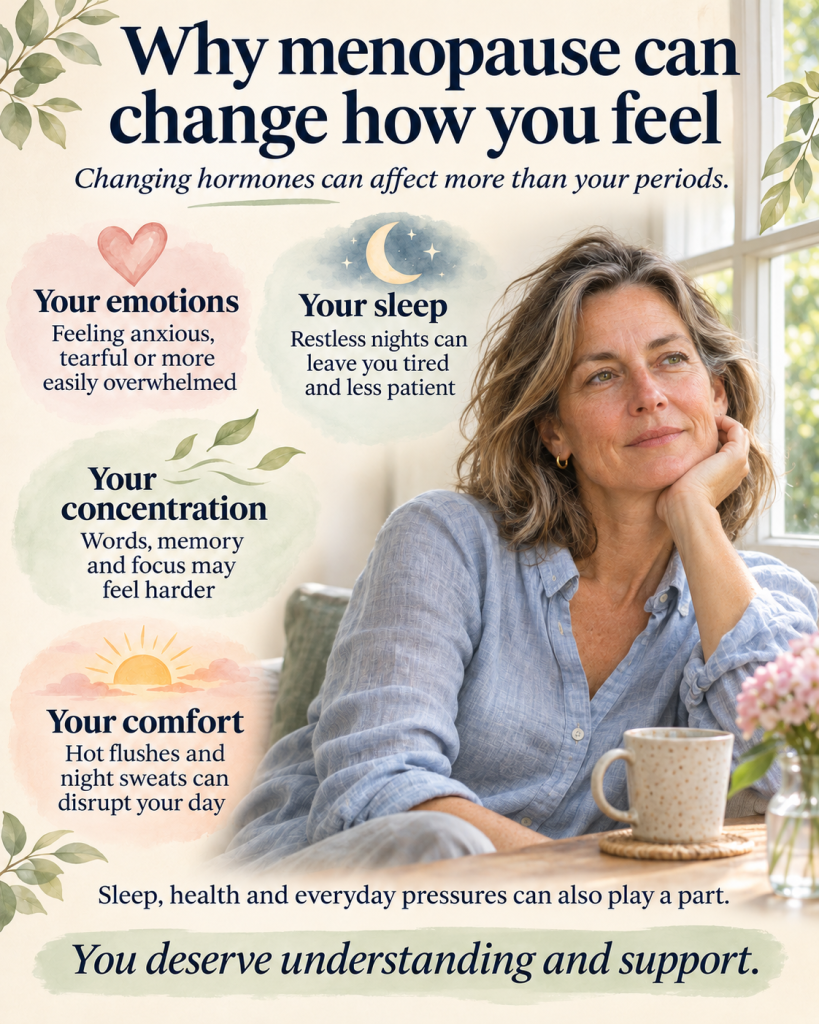
Why menopause can change how you feel
Hormonal changes and everyday pressures can interact. Several things may be happening together.
Changing hormone levels
Hormones fluctuate during perimenopause; oestrogen generally remains lower after menopause.
↓
01 · EMOTIONS
Mood and emotional wellbeing
Changes may include irritability, anxiety or low mood.
02 · TEMPERATURE
Hot flushes and night sweats
Physical symptoms can interrupt rest and daily activities.
03 · REST
Disrupted sleep
Poor sleep can leave you tired and make emotions harder to manage.
04 · THINKING
Memory and concentration
Brain fog may make words, focus and everyday tasks feel harder.
↓
These experiences can reinforce one another
Less energy · More frustration · Feeling overwhelmedThis is a simplified explanation, not a diagnostic test. Life circumstances, medicines and other health conditions can also affect how you feel. Based on NHS menopause information.
When familiar tasks suddenly feel harder
Brain fog can mean searching for a familiar word, forgetting why you entered a room or struggling to focus. Sleep difficulties can make concentration and mood worse. You may find yourself checking things more often or avoiding situations you previously enjoyed.
These experiences deserve attention. If memory changes are worsening, unusual for you or affecting safety, seek medical assessment rather than assuming they are hormonal.
Is it menopause, stress or something else?
Sometimes more than one factor is involved. Work, caring responsibilities and relationship pressures may coincide with hormonal changes. Thyroid problems, anaemia, medicines, anxiety and depression are among the other possibilities a clinician may consider.
A consultation should explore when symptoms began, menstrual changes, sleep, physical symptoms, medical history and current medicines. Tests may be useful for particular concerns, but hormone blood tests are not routinely needed to identify menopause in otherwise healthy women aged 45 or over with typical symptoms.
What can help?
You do not need to tackle everything at once. A few manageable steps can make it easier to explain what is happening and explore treatment:
- Keep a brief record. Note your sleep, mood, periods and physical symptoms, alongside anything that made a day particularly difficult.
- Make room for rest and support. Regular movement, balanced meals, a consistent sleep routine and talking to someone you trust can support wellbeing. These are supports, not a test of willpower.
- Discuss treatment that fits your needs. Options may include HRT, menopause-specific cognitive behavioural therapy (CBT) and treatment for a separate mental health condition where appropriate.
HRT can be considered for depressive symptoms that begin around the same time as other menopause symptoms and do not meet the criteria for depression. Its suitability depends on your health history and preferences. CBT may help with menopause-related sleep difficulties or depressive symptoms associated with hot flushes and night sweats.
Depression needs its own assessment and treatment; HRT should not be treated as a substitute. Persistent low mood, loss of interest or anxiety that affects daily life are reasons to seek help.
A conversation can be a starting point
You do not need to arrive with a diagnosis or know which treatment you want.
At Phoenix Women’s Health in Watford, you can discuss your concerns with a gynaecologist and explore appropriate next steps.
Explore our menopause care
View clinic dates and contact us
Further reading
NHS: Menopause and perimenopause symptoms
NHS: Things you can do to help
NICE NG23: Menopause — identification and management
Prepared 13 November 2026. General information; individual symptoms require assessment.